ThrillStay
Plan your stay
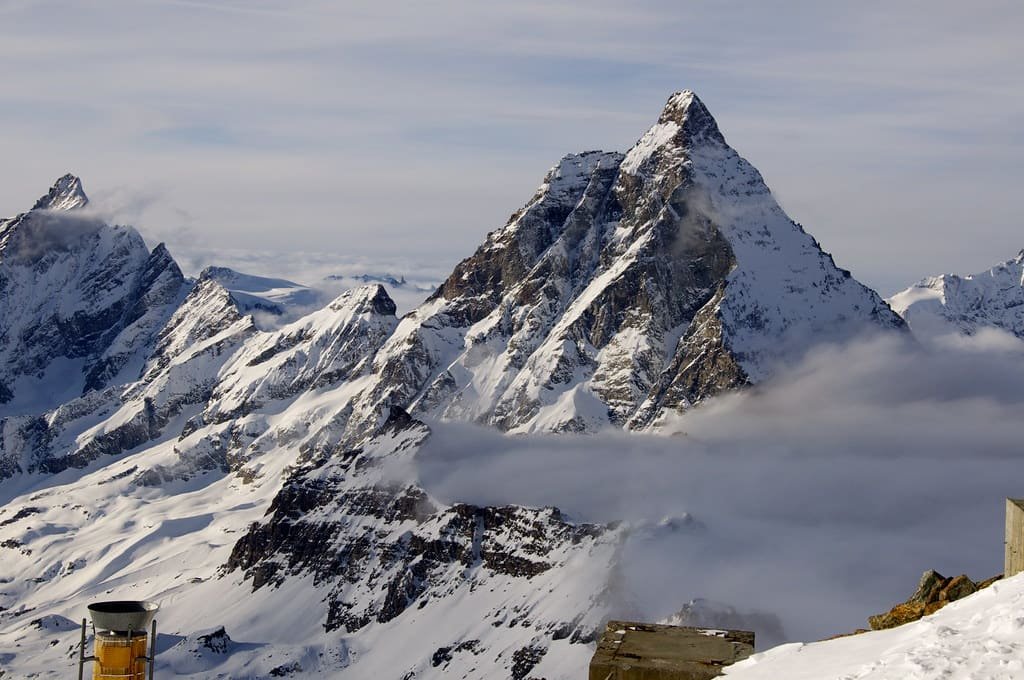
The Matterhorn rising above a sea of cloud

Choosing a region

NOBODY IS
MARKETING
THIS AT YOU.

An honest, sourced comparison of the Aosta Valley against the French Alps, Austria and the Dolomites — winter and the other eight months — including where you should book somewhere else.

The short answer

Three reasons to
book elsewhere.

Most comparison pages are written by someone with exactly one answer. Here are three where the answer is not us — first, because you would find out anyway, and finding out in March is expensive.

You want the most linked kilometres, full stop

Then go to the Three Valleys. About 600 km by their count, 543 km once somebody measured it holding the tape properly source — either way, the biggest lift-linked area in the Alps. We are not going to stand here with a calculator.

Après is the actual point of the holiday

Then go to the Arlberg. St Anton and Ischgl are the undisputed champions and we are not in that fight.

We are not a monastery either. There is a club at 2,500 m under the Matterhorn source, and in April a parade skis down from Plan Maison in swimwear to open the summer season. source You sign a waiver first. There is a reason for that.

You want to click out of your skis at your own door

The French stations are built for exactly that and they are very good at it. There is plenty of ski-in, ski-out here too — you just have not heard about it, from a region that has had Mont Blanc and the Matterhorn lying around in it for several million years and still cannot bring itself to mention them twice.

Still here? Then none of those was you — and everything below is the argument, with every number linked to where it came from.

Snow, honestly

Guaranteed and
real are not
the same word.

The Dolomites promise snow-sure skiing and deliver it. It is worth understanding exactly how, because the mechanism is the difference.

The Dolomites

Manufactured, at scale, brilliantly

About 1,160 km, some 97% of the area, is covered by snowmaking, served by roughly 4,700 snow cannons, with skiing between 1,500 m and 3,200 m and skiability guaranteed December to April even without snowfall. source

That is a genuine engineering achievement and it works. It is also why photographs from February so often show a white ribbon running through green fields: at 1,500 m, the guarantee is the cannon, not the winter.

The Aosta Valley

Altitude, which needs no maintenance

Breuil-Cervinia sits at 2,050 m — higher than almost every Dolomite village, and above the point where most Dolomite pistes finish — and skis to 3,480 m on the Plateau Rosà glacier, one of the highest lift-served points in Europe. It is the most snow-sure resort in Italy, runs late October to early May, and holds roughly 25 km of open piste through the summer. source

It is also the only glacier in Italy that skis through the summer, May to September, which is why the national teams train here in July. Warm spells can close it for a spell, so check the day before rather than the month before. But no other Italian resort has a July to close.

If what you want is cold snow that fell out of the sky onto north-facing slopes above 2,000 m, altitude does that on its own — in a bad winter as well as a good one.

Off the piste

The one thing
France cannot
sell you.

This is not a matter of terrain or taste. It is a matter of law, and it has been settled since 1985.

Heliskiing is illegal in France. The 1985 Mountain Law, at Article 76, makes it an offence to drop passengers in the mountains for leisure purposes outside a few designated locations, and the ban has stood ever since. source

The Aosta Valley permits it under a specific regional law that regulates the activity on defined routes, with drops available from La Thuile, Valgrisenche, Courmayeur, Cervinia and Monterosa. source Italy and Switzerland are the only Alpine countries where it happens at any real scale.

The rest of the Alps is a patchwork. Austria allows it in one place only, Arlberg/Lech, and on a permission that currently runs to 2027. Italy has no national law at all, so it falls to each region, and the Dolomites are under active pressure to restrict it further. source

So if a helicopter drop is anywhere on your list, the comparison is not “which region is better”. It is which region can still say yes in five years, from five separate valleys.

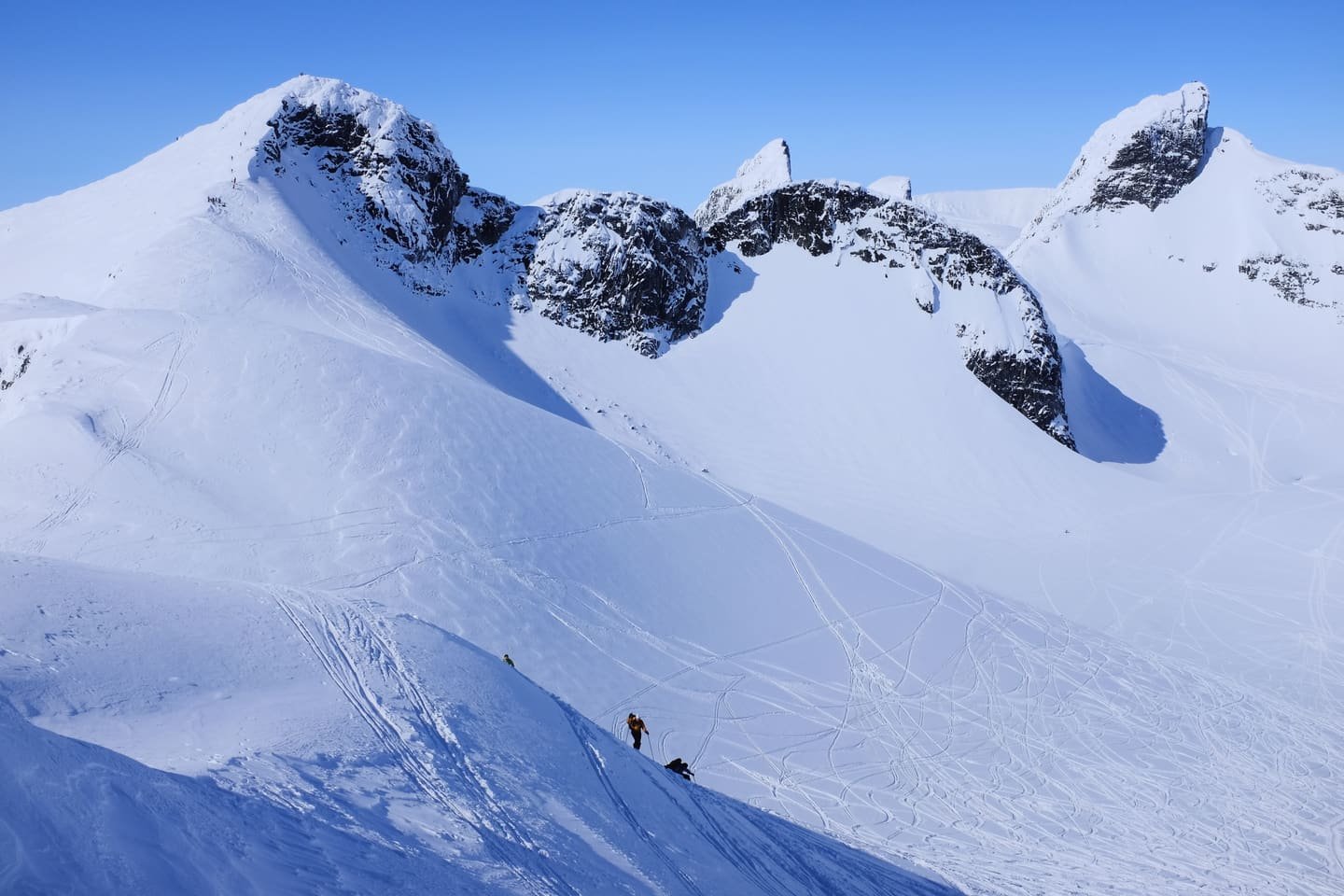
A ski tourer crossing a wide snowfield beneath rock summits

What the drop actually buys: a wide, empty snowfield under rock summits. Routes are fixed by regulation rather than by whoever is flying, and the guiding is IFMGA-led.

The size question

One pass.
Six valleys.
No lift between them.

“Kilometres of piste” is the number everyone quotes and the one that misleads most, because it rarely says whether you can reach them on skis.

AreaQuoted pisteReachable on skis?The catch
Dolomiti Superski 1,246 km Roughly half The largest ski area in the world by total piste — but only about half is linked by lifts and pistes; the rest needs a bus or a car. source
Les 3 Vallées ~600 km (543 measured) Yes The biggest genuinely lift-linked area in the Alps. On raw connected scale, this wins. source
Paradiski 425 km Yes La Plagne and Les Arcs, joined by the Vanoise Express since 2003, on 160 lifts. source
Aosta Valley
one regional pass
838 km (24 areas) No — separate valleys 838 km across 24 areas on 199 lifts, all on one pass — the figure counts the Swiss, French and Piedmont sides you can reach with it. The valleys are not linked to each other; the pass is what joins them source — valid 24 Oct 2026 – 2 May 2027 and reaching the Swiss lifts at Plateau Rosà. The Skyway Monte Bianco cable car, the La Rosière lifts in France and the Alagna lifts in Piedmont are all on it. Zermatt is an option you can add when you buy — two Zermatt days on a six or seven-day ticket, three on a thirteen or fourteen-day one — or a daily supplement later, if you said no and changed your mind on the chairlift. source

The Aosta Valley is not claiming to out-kilometre the Three Valleys. It is pointing out that the Dolomites’ headline number quietly includes terrain you cannot ski to — and that here, the pass does not stop at the resort boundary, or at the national one.

The thing nowhere else does

Three countries,
on skis, one trip.

Not a transfer. Not a minibus day trip. Lift-linked crossings you ski over and ski back from, all on the same regional pass.

Italy → Switzerland

Cervinia to Zermatt

The regional pass extends to the connected Zermatt stations, and an Italian pass upgrades to Zermatt a day at a time at the ticket office rather than for the whole week. The Colle del Teodulo transit was improved for skiers moving between Plateau Rosà and Zermatt. source

Italy → France

La Thuile to La Rosière

Espace San Bernardo joins the two over the Little St Bernard Pass: 152 km on 38 lifts, topping out at 2,800 m on Mont Valaisan, open from mid-December to mid-April, with the full cross-border link closing a few days before the rest. source

Aosta → Piedmont

Gressoney to Alagna

Monterosa Ski links three valleys under the Monte Rosa massif, Champoluc, Gressoney-La-Trinité and Alagna connected directly by lifts and runs. Frachey, Staffal and Alagna run from late November to mid-April; Champoluc and Punta Jolanda close about a week earlier, after which you enter from Frachey. source

Already paid for

You may already
own part of
this trip.

Two things worth checking before you price anything: the pass in your pocket, and a cable car that does not need skis at all.

The pass you already have

Five Aosta Valley mountains — Courmayeur, Cervino Ski Paradise, La Thuile, Monterosa and Pila — are on the Ikon Pass. An Ikon Pass gives seven combined days there, an Ikon Base Pass five, with no blackout dates. From Cervino you cross to Zermatt, itself an Ikon destination; from Courmayeur you reach Chamonix through the tunnel. source

If you already ski North America on an Ikon Pass, a week here costs you no lift ticket at all.

The crossing that needs no skis

The Matterhorn Alpine Crossing links Zermatt and Cervinia by cable car all year, over the border at nearly 3,500 m — the highest cross-border cableway in the Alps. Since November 2025 it carries luggage too, twice a day in both directions: check your bags in at either valley station, travel with hand luggage, collect them on the other side. source

Which makes it a genuine way to move between Italy and Switzerland, not just a viewpoint. No train around, no driving round the massif.

And Switzerland

You do not have
to choose.
That is the point.

Zermatt is, by a distance, one of the great mountain villages of the Alps, and the Matterhorn from that side is the most photographed mountain in Europe for good reason. None of what follows disputes any of it.

You still get Zermatt

This is the part people miss. Basing in Italy does not cost you Zermatt — the regional pass extends to the connected Zermatt stations, and an Italian pass upgrades a single day at a time at the ticket office. source

Ski it on the Tuesday because the light is right. Do not ski it on the Wednesday because it is snowing and you would rather be in the trees. You are not paying for it either way.

Getting there costs you an afternoon

Zermatt is car-free. You drive to Täsch, five kilometres short, park, and take the Matterhorn Gotthard Railway in — twelve minutes, every twenty. It is elegant, and it is one more transfer with the ski bags and the children. Reckon on about four hours from Geneva, three and a half from Zurich. source

On the Italian side you drive to the door. Turin is the closest airport to the valley at about 1 h 20 to the valley floor.

Then there is the bill

Eating out in Switzerland runs some 80–100% above Italy, with the overall cost of living close to 80% higher. source A mid-range three-course dinner for two averages around €107. source A fondue in Zermatt is CHF 45 and up, per person.

You can watch the consequence at lunchtime. The Teodulo carries a steady traffic of people skiing down the Italian side for a plate of pasta and riding back up afterwards — which tells you more about the price difference than any index does.

The lift pass is not where you save

Worth being straight about, because it is the first thing people assume. Six-day adult passes, both sides, as published for 2026/27. The Swiss “from” prices apply to shoulder weeks, so read them as a floor rather than a like-for-like:

Six-day adult passPublished priceWhat it covers
Zermatt only from CHF 384 The Swiss side. source
Cervinia–Valtournenche around €338 The Italian side. From three days upward, days on the pass can be used in another Aosta Valley area within the period you bought — not extra days, the same days spent elsewhere. source
International both sides from CHF 432 / ~€464 Bought from Zermatt or from Cervinia respectively. Near enough the same money either way. source

The pass is roughly a wash. If you want both sides you pay about the same wherever you buy it. The difference is not the skiing — it is the six evenings, the seven breakfasts and the bed. That is where the 80–100% sits, and it is why the same holiday costs materially less from the Italian side while putting you on the identical glacier by eleven in the morning.

One village, or a region

The other difference is what happens on the day the weather closes in. Zermatt is a superb village and it is a village — you are there, and that is the holiday. Base on the Italian side and a bad-weather day is a Roman theatre still in use, a wall of medieval castles down the valley floor, thermal baths under Mont Blanc, a Fontina cellar cut into a mountain, or a national park older than any other in Italy.

The same budget either buys you seven nights of Swiss prices in one village, or it buys you the same mountain from the other side, the days in Zermatt you actually want, and a region behind you for the days you do not.

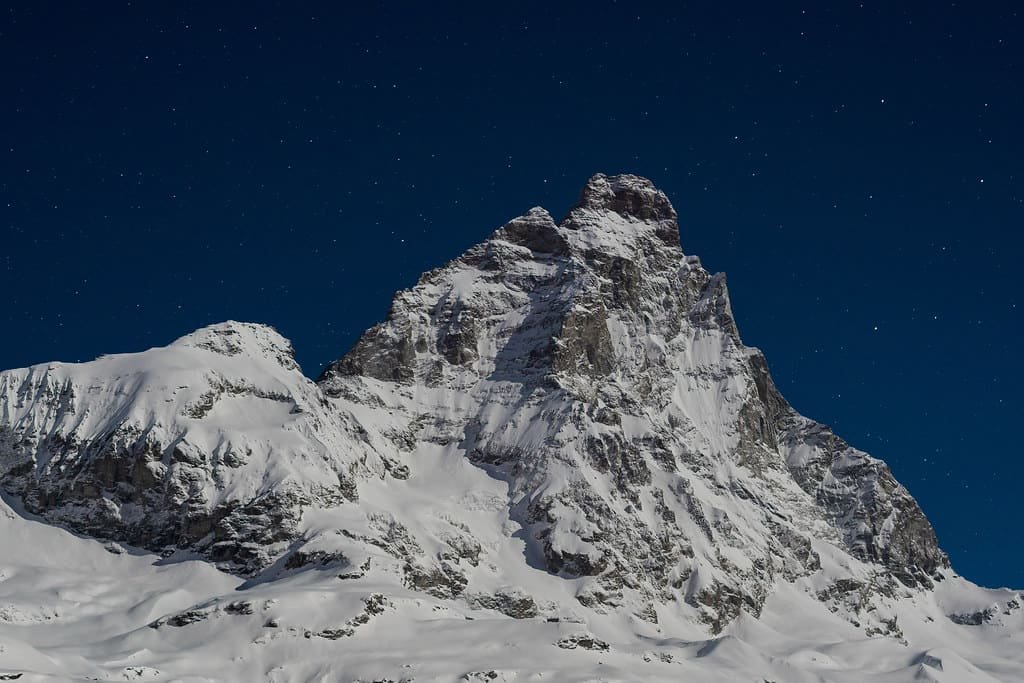
The Italian face of the Cervino under fresh snow

The Italian face of the Cervino. Same mountain, different side — and this is the side with the afternoon sun on it.

The other eight months

A ski region is
a poor thing to
be, alone.

Most comparisons stop at the last lift in April. That is convenient for resorts built only for winter, and it quietly writes off two thirds of the year.

Gran Paradiso

Italy’s oldest national park, and the only 4,000 m peak whose entire massif lies inside Italy. Ibex on the rock at dawn, and the most attainable of the four giants for a first proper summit.

Roads that people plan years around

The Great St Bernard, the Little St Bernard, the ramp to Cervinia. World Cup downhill at La Thuile, European Cup at Pila. The cols are the destination for cyclists in a way the pistes are for skiers.

A Roman city with the Alps behind it

Aosta has a Roman gate and bridge still carrying daily traffic, a Roman theatre that reopened in 2026 after restoration and hosts a summer season, a wall of medieval castles down the valley floor, and a megalithic site older than Stonehenge. None of it is a reconstruction.

This matters for the comparison in a specific way: a week here in July is a different holiday from a week here in February, not a consolation for having missed the snow. Very few Alpine regions can say that honestly, and the ones built purely around lifts cannot say it at all.

The table

Austria is not
competing here.
France is.

Two entirely different arguments, so it is worth splitting them rather than pretending one answer covers both.

Against Austria

This is northern Italy. Fontina DOP aged in mountain tunnels, cured meats, rye and butter, and four Michelin stars inside a region of 123,000 people — Paolo Griffa and Vecchio Ristoro in Aosta, Wood in Cervinia, Le Petit Bellevue in Cogne — so you are not driving two hours for it. source Blanc de Morgex et de La Salle grows on some of the highest vineyards in Europe.

Austria has wonderful mountain food. Different argument.

Against France

France wins on food and wine at the top end and it would be silly to claim otherwise. The difference is not quality — it is what surrounds it. A high-altitude Tarentaise resort feeds you extremely well inside a purpose-built station. Here the good tables are in villages that existed before the lifts and will exist after them.

You are eating in a place, not in a resort.

Courmayeur

Bought by people
who could ski
anywhere.

Courmayeur usually gets a line about being “upmarket” and then everyone moves on. The whole argument of this page is in that one town.

It is a guiding town, not a resort

The first mountain guides association in Italy was founded here in 1850, the second anywhere in the world. source There is a museum of it in the middle of town. Courmayeur was a serious mountaineering place for generations before anyone thought to sell it as a holiday.

The lift is the extravagance

Skyway Monte Bianco opened in 2015 at a cost of €110 million — reckoned the most expensive cable car installation in the world — lifting you to 3,466 m on Mont Blanc in cabins that rotate through 360° as they climb. source From Punta Helbronner at the top, the descents are the reason experienced skiers come.

The money goes on the table

Much of the town is still family-run businesses handed down through generations, and it draws the seasoned traveller who wants quality rather than extremes. source Beds run from a four-generation family hotel around €200–350 a night to a five-star at roughly €420 — and in March, Michelin-starred kitchens come up the mountain for the Mountain Gourmet Ski Experience.

People with the means to ski anywhere turn up here, and not one of them came because a brochure shouted at them.

What you are really buying

Nobody here
is checking
your jacket.

The hardest thing to put a number on, and the thing people actually come back for.

First, a gap we cannot fill: we have not found reliable published figures comparing skier density across these regions season by season, so this page will not invent one. Anyone quoting you a crowding statistic for the Alps is almost certainly making it up.

What can be said structurally is this. The Three Valleys concentrates its 543 measured kilometres into one linked network fed by a handful of access roads. The Aosta Valley spreads its skiing across separate valleys — Courmayeur, La Thuile, Cervinia, Monterosa, Cogne, Pila — each with its own approach, its own lift system and its own weather, all on one pass. The same number of skiers spread across six valleys behaves differently from the same number funnelled into one.

And there is a cultural point underneath it that no statistic captures. There are Alpine resorts where the equipment is part of the outfit and being in the right one this season is part of the trip. That is a legitimate holiday and some people love it. It is simply not what happens here. Nobody is reading your jacket on the Teodulo. There is no bar you are supposed to be seen in.

It is not that the region is hidden — it has four of the continent’s great massifs in it. It is just not being shouted at you, and after a few days you notice that the absence of the shouting is the holiday.

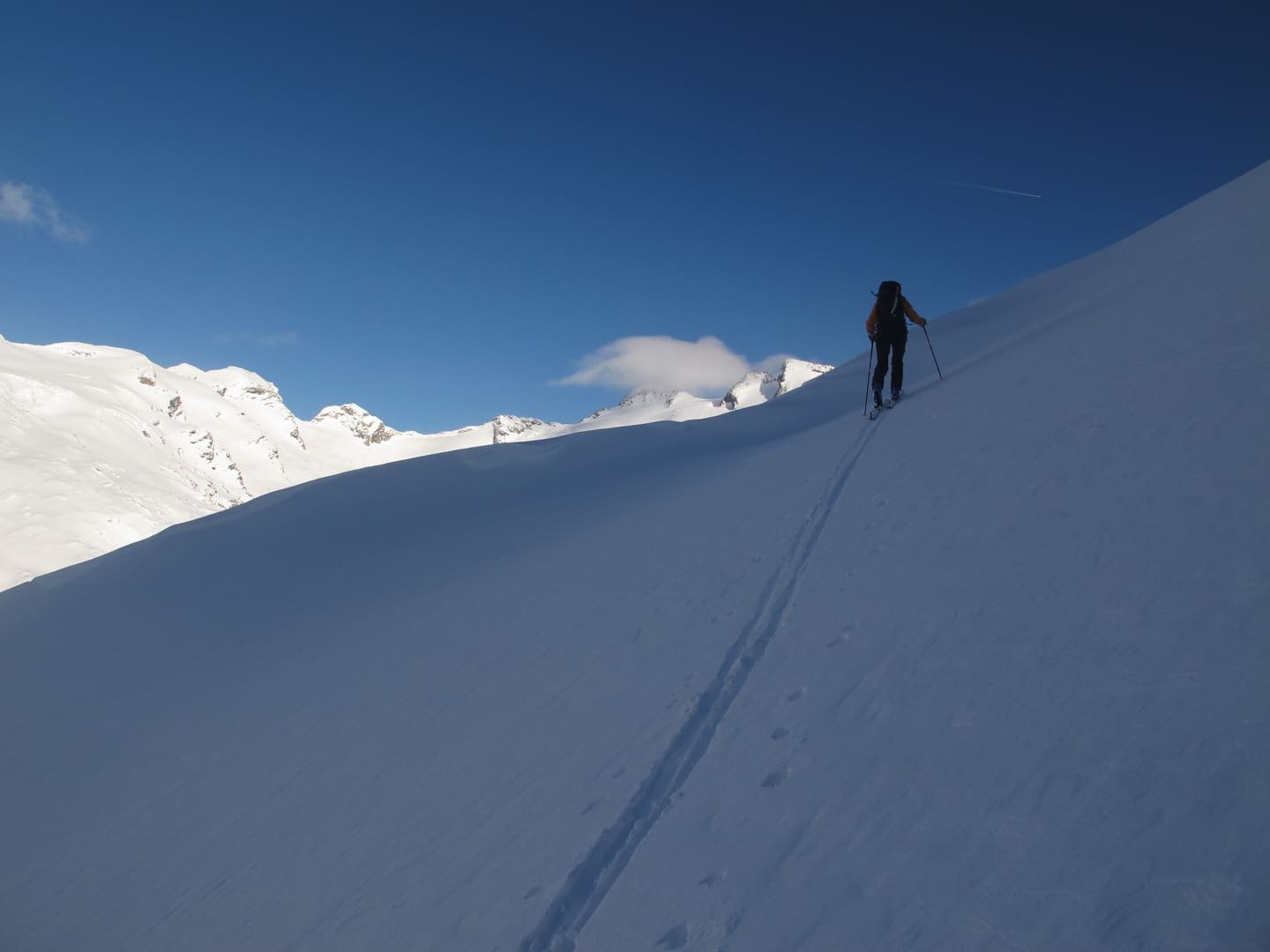
A lone ski tourer breaking trail up a clean snow ridge

What you are looking at

Four giants,
one valley.

Every region has a mountain on its posters. This one has four, and they are the four almost anyone can name.

4,808 m

Mont Blanc

Monte Bianco · from Courmayeur

4,634 m

Monte Rosa

Dufourspitze · from Gressoney · Champoluc — the Lyskamm, 4,527 m, is the summit you climb from this side

4,478 m

Matterhorn

Cervino · from Breuil-Cervinia

4,061 m

Gran Paradiso

Grand Paradis · from Cogne · Valsavarenche

More than twenty summits on the UIAA list of Alpine four-thousanders stand on or over the Valdostan watershed. They gather into four great massifs — and those four are how the valley knows itself. It is also the Italian side of both Mont Blanc and the Matterhorn — the side with the afternoon sun on it, and the side most people have never stood on.

Questions we get

The comparisons
people actually search.

Including the ones where the answer is not us.

Is the Aosta Valley better than the French Alps for skiing?

Not on connected size: Les 3 Vallées is the largest lift-linked area in the Alps at roughly 600 km, about 543 km measured consistently. The Aosta Valley wins on range and on altitude, and on one point that is not a matter of opinion — heliskiing is illegal in France and legal here.

Why is heliskiing banned in France but allowed in Italy?

France's 1985 Mountain Law, Article 76, makes dropping passengers in the mountains for leisure an offence outside a few designated locations, and it has stood since 1985. The Aosta Valley permits heliskiing under a regional law regulating it on defined routes, with drops from La Thuile, Valgrisenche, Courmayeur, Cervinia and Monterosa.

Does the Dolomites have real snow or artificial snow?

Both, but the guarantee is artificial. About 1,160 km of the Dolomiti Superski area, roughly 97%, is covered by snowmaking served by around 4,700 cannons, with skiing between 1,500 m and 3,200 m and skiability assured December to April even without snowfall. It works, and it is engineering rather than winter.

Where can you ski in summer in the Alps?

Breuil-Cervinia skis year-round on the Plateau Rosa glacier, holding roughly 25 km of open piste through the summer months. The village sits at 2,050 m and lifts reach 3,480 m, one of the highest lift-served points in Europe, which is also why it is the most snow-sure resort in Italy.

Can you ski Zermatt from Italy on an Italian ski pass?

Yes. The Aosta Valley regional pass extends to the connected Zermatt stations, and an Italian pass can be upgraded to Zermatt a single day at a time at the ticket office rather than for the whole week. The crossing runs from Breuil-Cervinia over Plateau Rosa and the Colle del Teodulo.

Is the Aosta Valley worth visiting in summer?

It is a year-round region rather than a ski region with a summer. Gran Paradiso is Italy’s oldest national park and the only 4,000 m peak whose entire massif lies inside Italy, the Great and Little St Bernard cols are destination cycling, and Aosta itself has a working Roman theatre and arch with a wall of medieval castles down the valley.

Is it cheaper to ski the Matterhorn from Italy than from Zermatt?

On living costs yes, on the lift pass barely. Published 2026/27 six-day adult passes are around 338 euro for Cervinia–Valtournenche against from CHF 384 for Zermatt only, and an international pass covering both sides costs near enough the same whichever side you buy it. The real gap is off the mountain: eating out in Switzerland runs some 80 to 100 per cent above Italy, so the saving is in the evenings and the bed rather than the skiing.

How long does it take to get to Zermatt from an airport?

About four hours from Geneva and around three and a half from Zurich. Zermatt is car-free, so the last stage is a change at Täsch, five kilometres short of the village, onto the Matterhorn Gotthard Railway, which takes twelve minutes and runs every fifteen to twenty. On the Italian side of the same mountain you drive to the door, with Turin about 1 hour 20 to the valley floor.

Can you visit Zermatt on a day trip from the Italian side?

Yes, on skis. The lift-linked crossing runs from Breuil-Cervinia over Plateau Rosa and the Colle del Teodulo, and the Italian pass can be upgraded to Zermatt for single days at the ticket office rather than for a whole week, so you ski it on the days the weather suits and skip it on the days it does not.

Why do wealthy skiers choose Courmayeur?

Because it was never built to be a luxury resort. Courmayeur founded the first mountain guides association in Italy in 1850, the second in the world, and much of the town is still family-run businesses handed down through generations. The Skyway Monte Bianco cable car, opened in 2015 at a cost of 110 million euro and reckoned the most expensive ever built, lifts skiers to 3,466 m on Mont Blanc in rotating cabins. The draw is the mountaineering pedigree, the terrain from Punta Helbronner and the food, rather than an address.

Does one ski pass cover the whole Aosta Valley?

Yes. The regional Aosta Valley skipass covers 838 km across 24 areas on 199 lifts, valid 24 October 2026 to 2 May 2027, and it includes the Skyway Monte Bianco cable car, the La Rosiere lifts in France and the Alagna lifts in Piedmont. It reaches the Swiss lifts around Plateau Rosa, and Zermatt can be added as an option when you buy: two Zermatt days on a six or seven-day ticket, three on a thirteen or fourteen-day one, or a daily supplement afterwards if you change your mind. The valleys are not lift-linked to one another — the pass is what joins them.

Where can you ski from Italy into France?

At La Thuile, over the Little St Bernard Pass into La Rosière. The combined Espace San Bernardo area offers 152 km of piste on 38 lifts and reaches 2,800 m on Mont Valaisan, running from mid-December to mid-April, with the full French-Italian connection closing a few days earlier.
Sources

Every figure on this page links to where it came from. Season dates, pass terms and snowmaking coverage change; these are the published positions at the time of writing. Where we could not source a claim, we have said so on the page rather than rounding it into something quotable.

Still deciding

Tell us what you
were about to book.

If the Aosta Valley is the wrong call for your week, we will say so — that is a cheaper conversation than a bad holiday. If it is the right one, we will show you exactly what the week looks like.

WhatsApp us