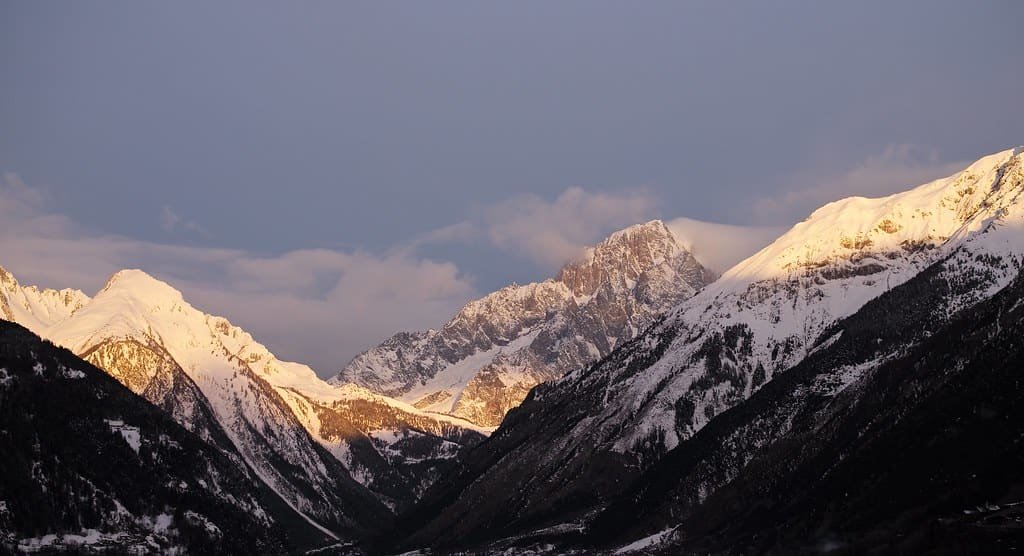
Mont Blanc
Monte Bianco · base Courmayeur
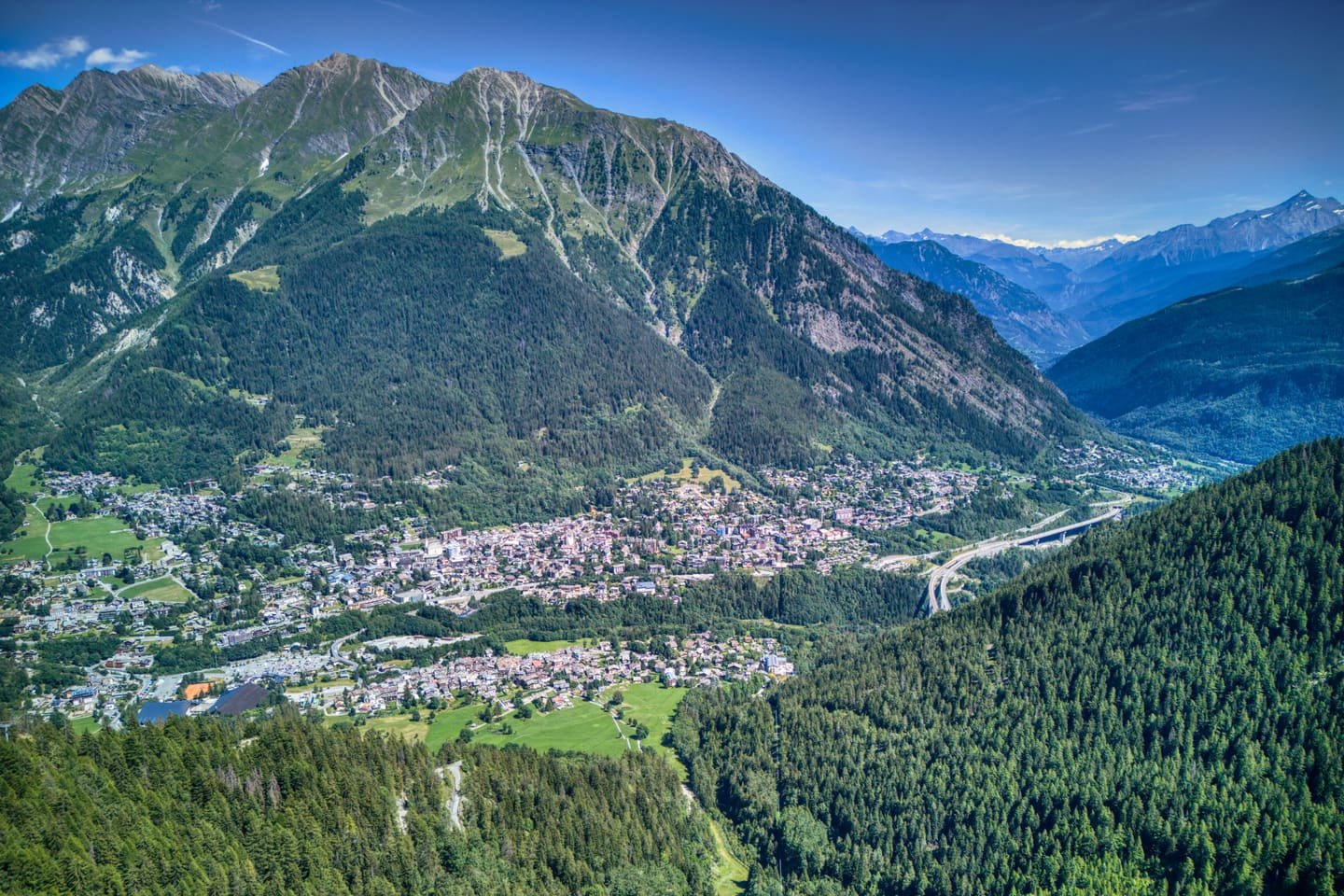
The Valley
Valle d’Aosta is Italy’s smallest region, but its side valleys run deep into four major mountain massifs. Your base changes the drive times, ski options, evening life and how easy it is to mix mountain days with everything else.
Italy's smallest region, and its most vertical.
Summits on the UIAA four-thousanders list stand on the Valdostan side — gathered into four great massifs.
Gran Paradiso becomes Italy's first national park.
Aosta founded as Augusta Prætoria. The street grid is still Roman.
Across nearly 200 lifts, all on one regional pass. The valleys are not linked to each other — the pass is.
Official languages — Italian and French — plus Franco-Provençal and Walser German.
The four giants
Mont Blanc and the Matterhorn are shared with France and Switzerland; Monte Rosa straddles the Swiss border. Gran Paradiso is the only one whose entire massif sits inside Italy — and the most attainable of the four.
More than twenty summits on the UIAA list of Alpine four-thousanders stand on or over the Valdostan watershed. They gather into four great massifs — and those four are how the valley knows itself. The full tally is longer than the postcards suggest: the Grandes Jorasses and the Dent du Géant on the Mont Blanc side; the Lyskamm, Castor, Pollux and the Breithorn summits along the Monte Rosa crest. The Grand Combin, which fills the view above the Great St Bernard, stands entirely in Switzerland. If you want the whole list, our IFMGA guides will happily talk you through it — and take you up a good number of them.
Monte Bianco · base Courmayeur
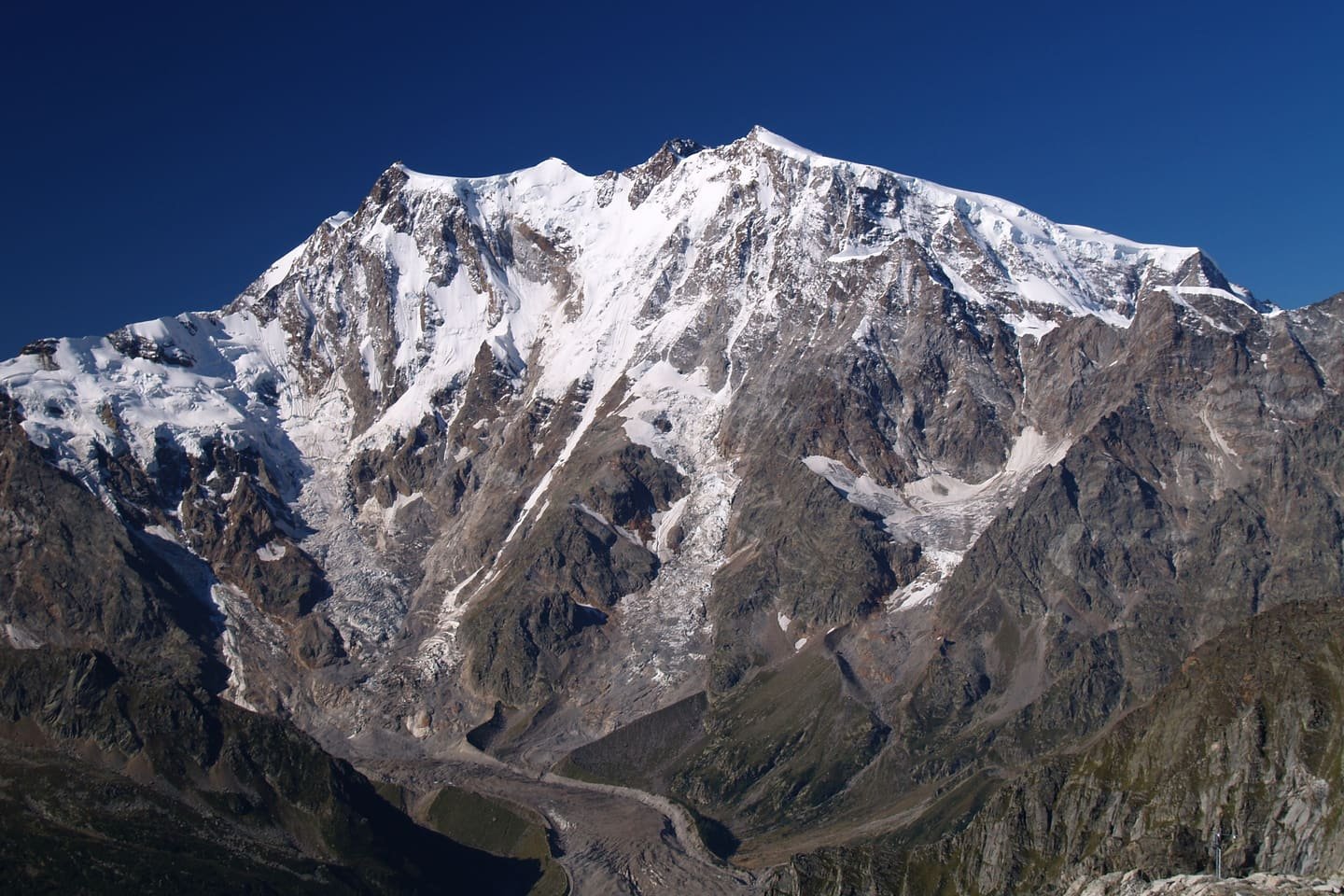
Dufourspitze · base Gressoney · Champoluc
The Lyskamm, 4,527 m, is the summit you climb from this side.
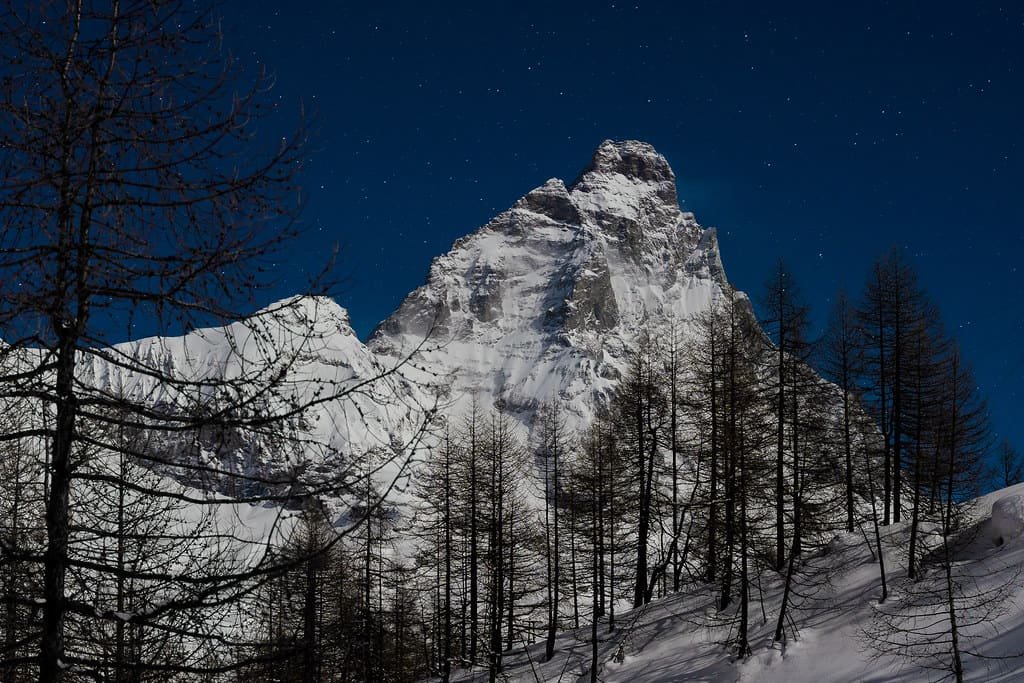
Cervino · base Breuil-Cervinia
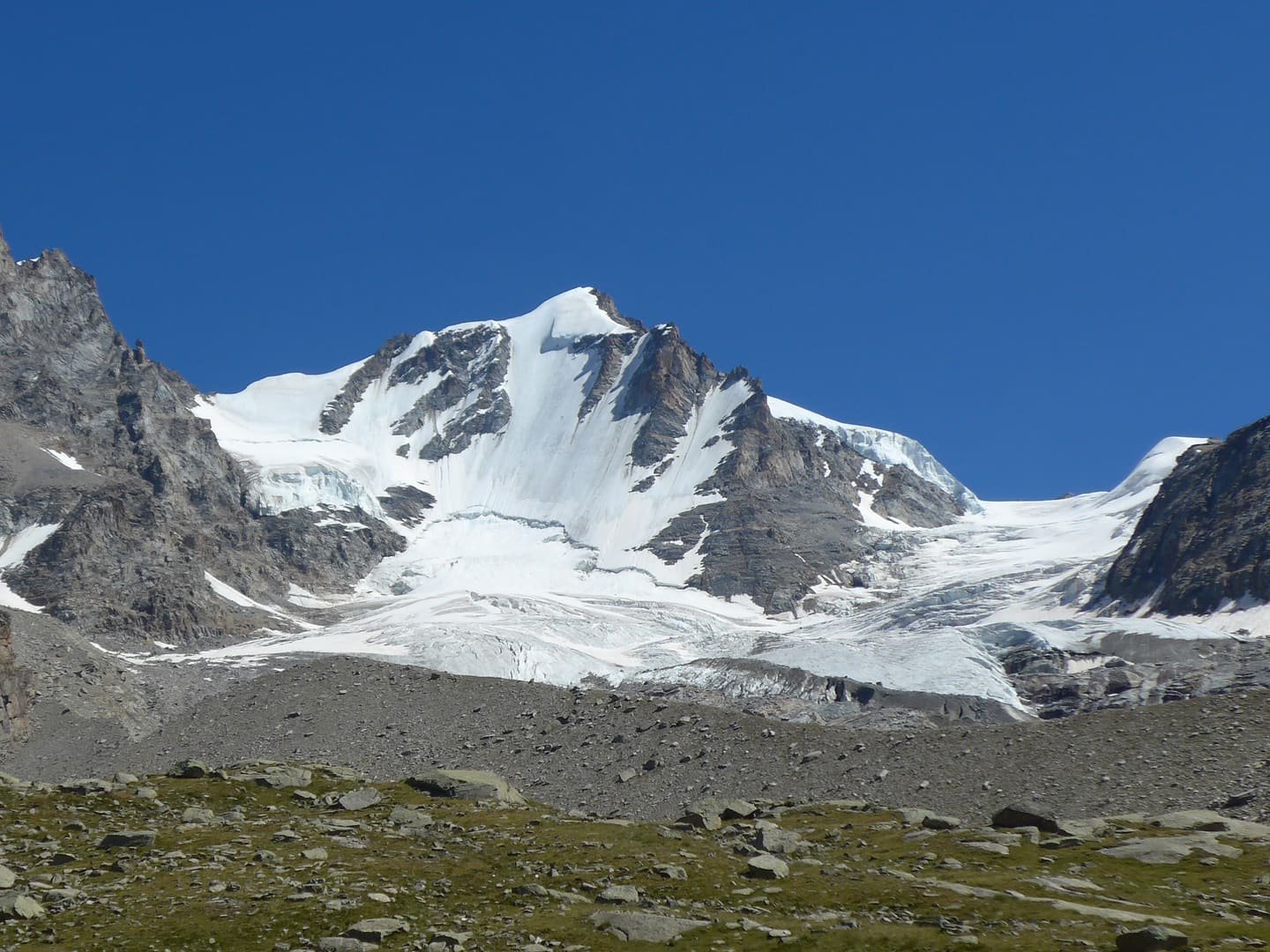
Grand Paradis · base Cogne · Valsavarenche
Where to base yourself
The valley is long and its side valleys are dead ends. Getting the base right is the single highest-leverage decision in planning a trip here — so here is the honest version, including who each place does not suit.
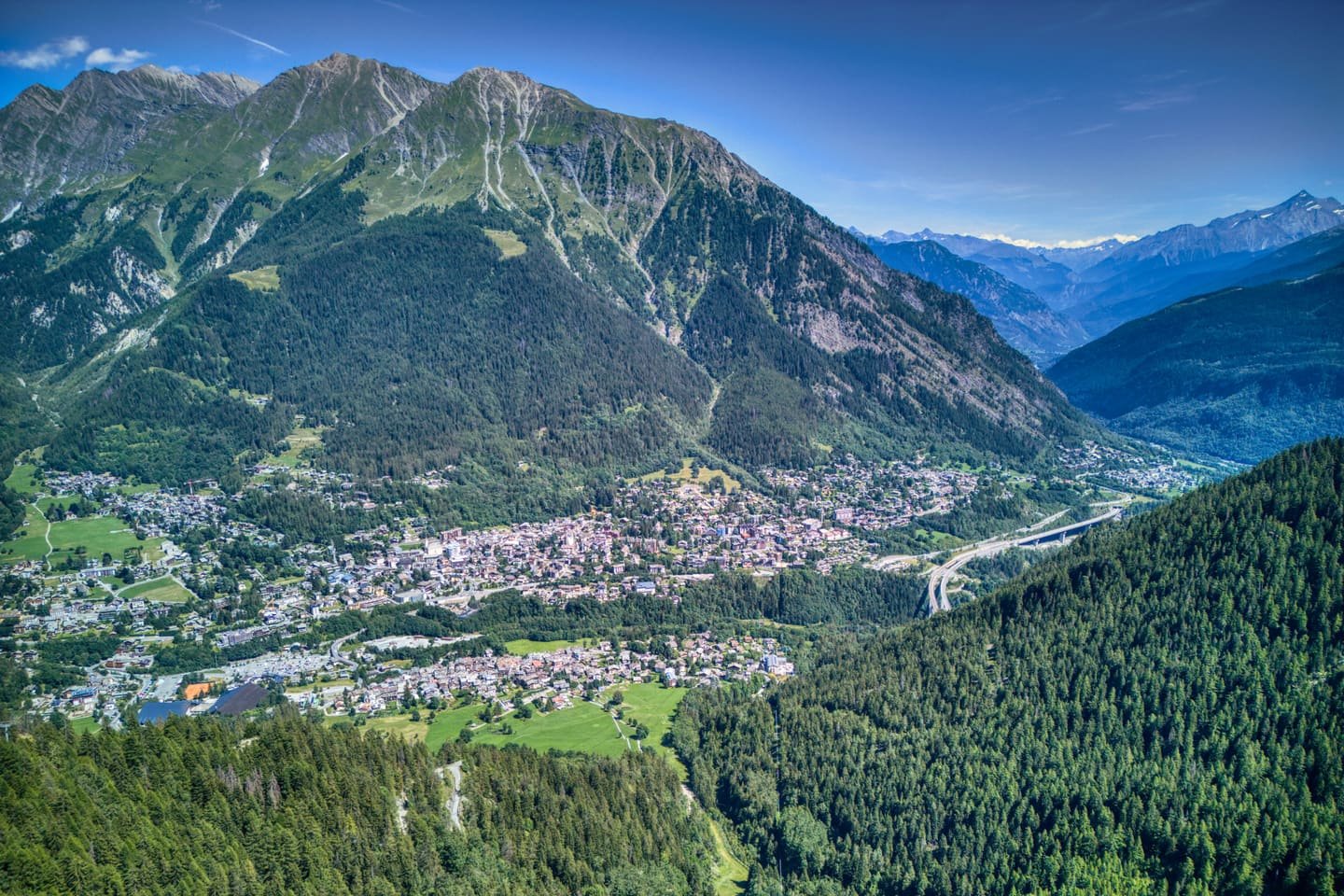
Under Mont Blanc · best for Skiing, dining, glamour, the Skyway
The valley's most cosmopolitan town, sitting directly beneath the highest mountain in western Europe.
A real town rather than a purpose-built resort, with a stone-paved centre, serious restaurants and a guiding tradition dating to 1850. Two aspects: the open, sunlit Chécrouit plateau facing north-east, and the wooded Val Vény side facing north-west that holds the snow; the Skyway climbs to 3,466 m from the edge of town; Pré-Saint-Didier's thermal baths are ten minutes away. The best all-round base for a first visit.
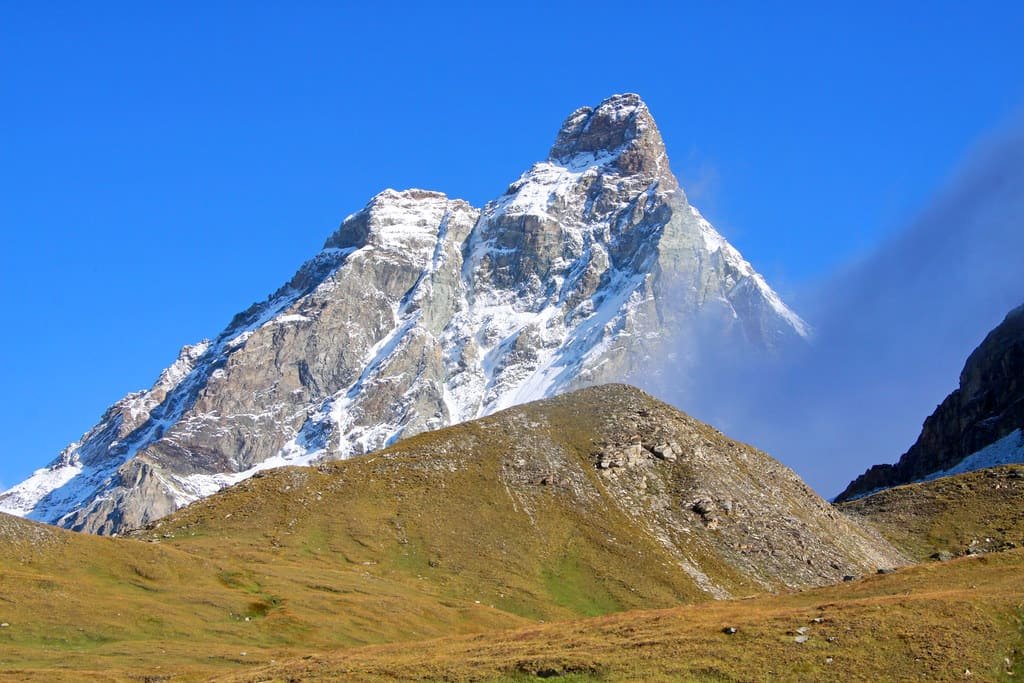
Under Matterhorn · best for High altitude, long season, crossing to Zermatt
High, wide and reliable, staring straight at the Italian face of the Matterhorn.
One of the highest resorts in the Alps, which makes it the safest bet for early and late season snow. The lift network links over the border into Zermatt, so you can ski to Switzerland for lunch. Terrain is broad, sunny and mostly forgiving — excellent for intermediates and for building confidence.
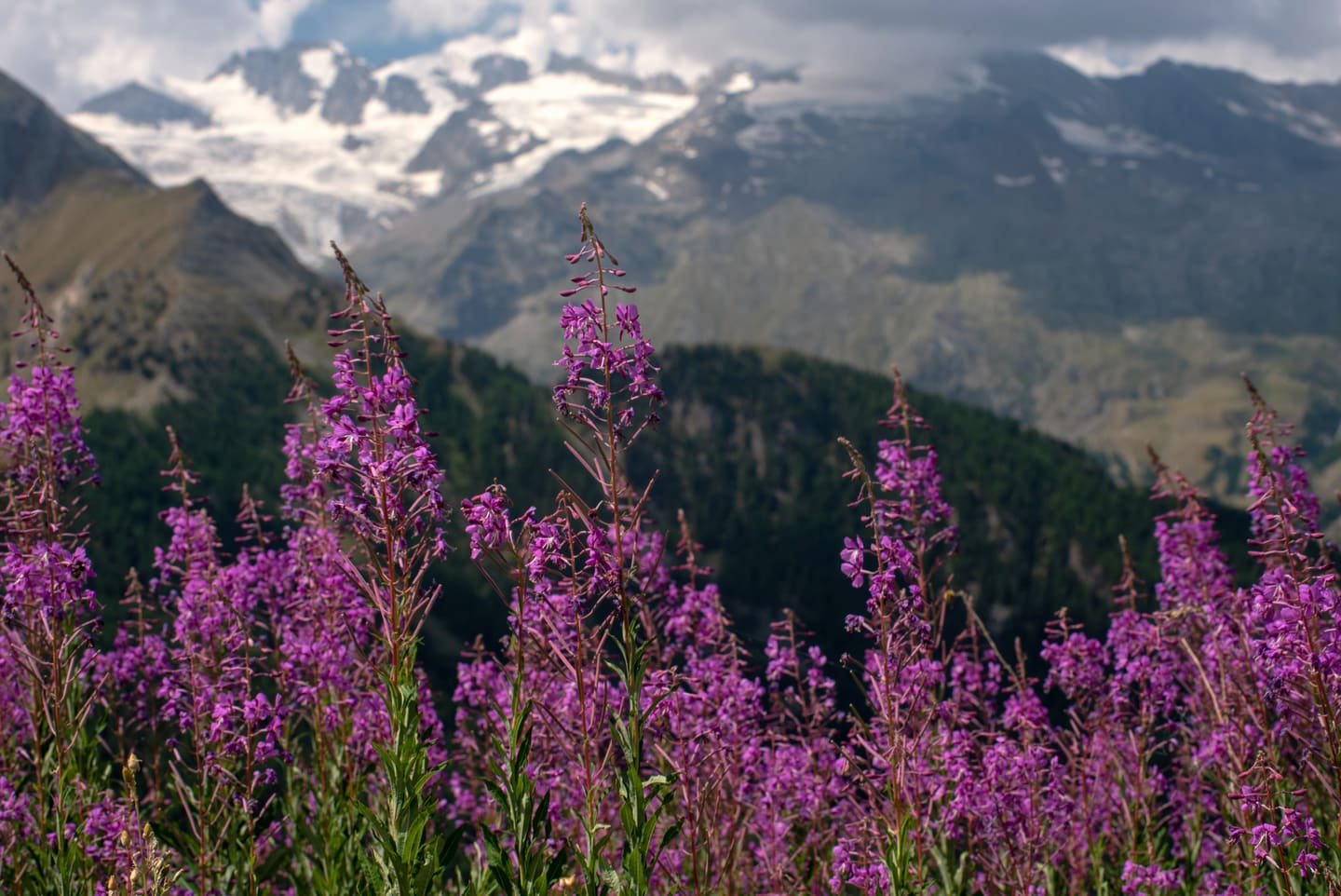
Under Gran Paradiso · best for Ice climbing, Nordic skiing, wildlife, quiet
A wide meadow at the mouth of the Gran Paradiso, and one of the world's great ice-climbing valleys.
Cogne keeps its downhill skiing small and deliberate — a cable car and eight pistes on Montzeuc, all on the regional pass — and puts everything else into what is rarer: superb cross-country tracks along the valley floor, frozen waterfalls that draw climbers from across the world, and a national park full of ibex on the doorstep. In summer it is a walking and wildlife base. Calm, unpretentious, and very good for families who prefer nature to nightlife.
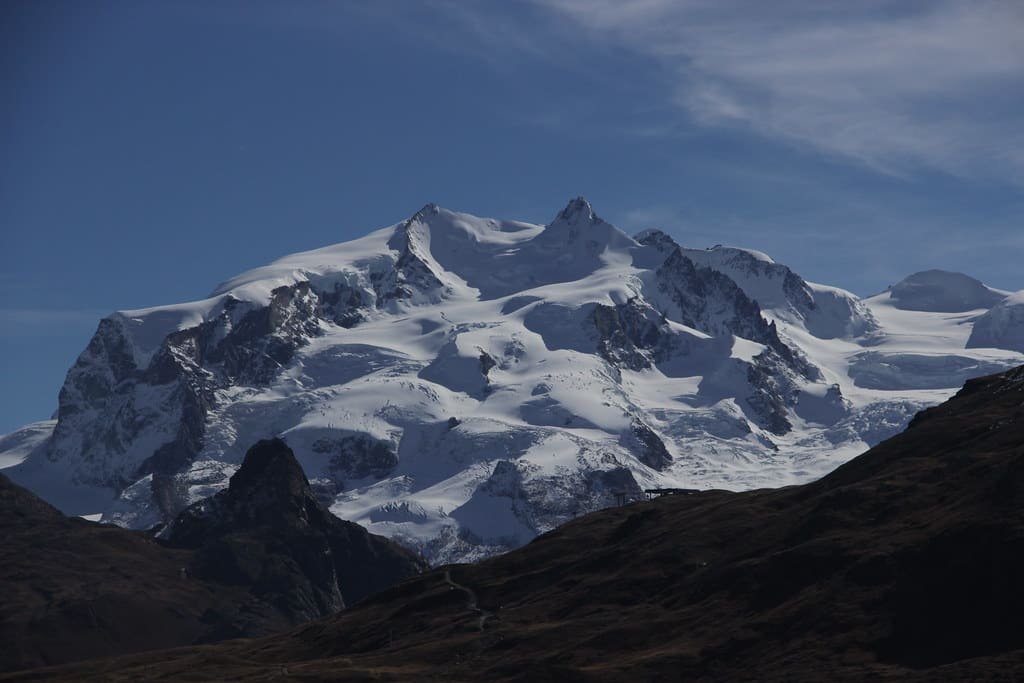
Under Monte Rosa · best for Freeride, Walser culture, uncrowded slopes
Three linked valleys under the Monte Rosa massif — the region's freeride heartland.
Monterosa Ski links Champoluc, Gressoney and Alagna across a huge, quiet lift network with legendary off-piste between the valleys. The villages are timber-and-stone Walser settlements with their own language and architecture. Fewer crowds than Courmayeur, more terrain than almost anywhere.
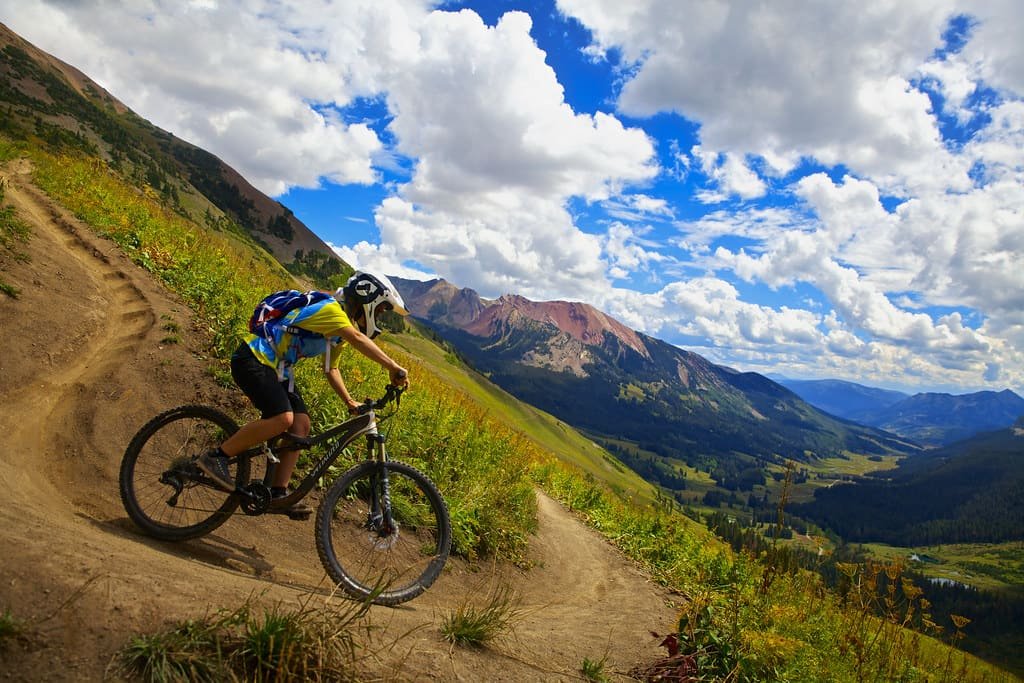
Under Rutor · best for Bike park, north-facing terrain, crossing into France
North-facing slopes that hold their snow, World-Cup downhill terrain in summer, and a lift link into France.
Quieter and better value than its neighbours, with north-facing slopes that hold snow, a link over the Little St Bernard into La Rosière, and a summer bike park that has hosted UCI Downhill World Cup racing. The Rutor glacier above is prime heliski and ski-touring ground.
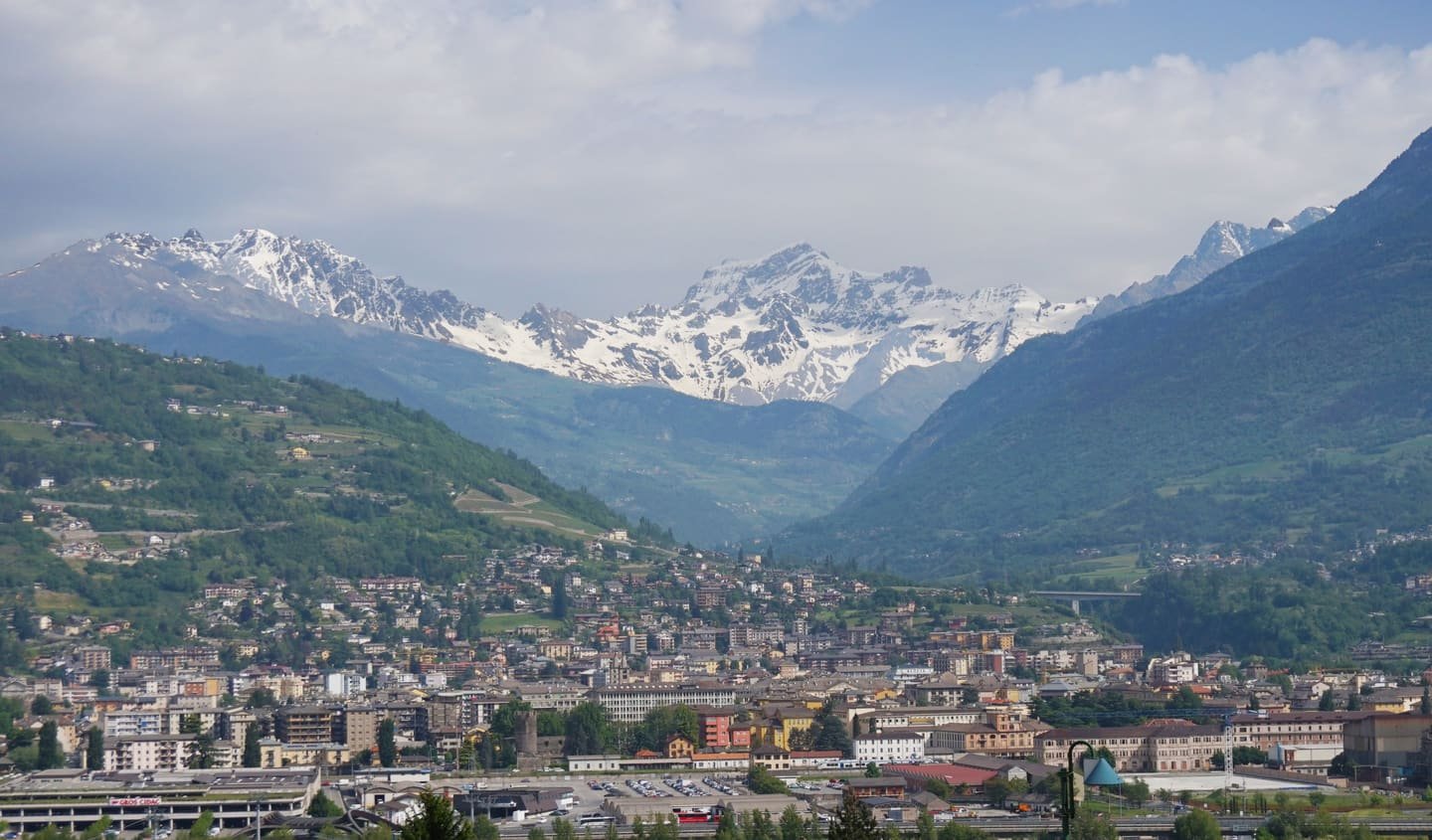
Under Emilius · best for City plus mountain, heritage, bike park, value
A ski area and bike park connected to a Roman city by a single cable car.
Stay in Aosta among two-thousand-year-old walls and ride the gondola straight up to Pila's slopes and bike stadium, where a new ten-seat cabinway reaches the Couis at 2,723 m in about fifteen minutes. It is the best-value base in the region and the only one where the evening involves a real city — restaurants, wine bars, museums and the megalithic park — rather than a resort street.
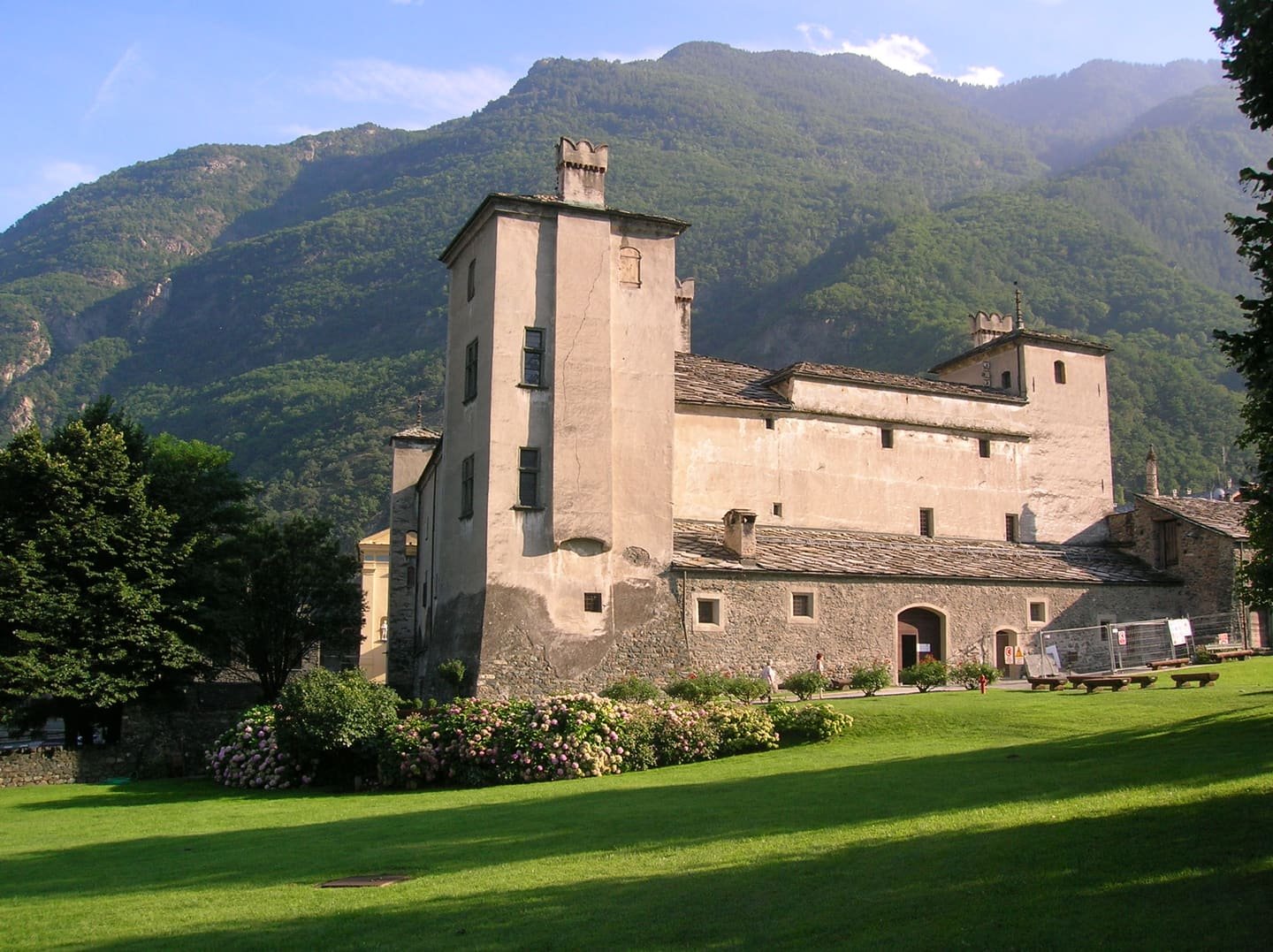
Under Monte Zerbion · best for Castles, wine, thermal baths, shoulder season
Castles, cellars, Forte di Bard and thermal water — the valley when the snow has gone.
Saint-Vincent, Bard, Verrès and Donnas sit low enough to be pleasant in spring and autumn. This is the heritage and wine end of the region: a dense line of medieval castles, the Nebbiolo of Donnas, thermal baths and a casino. Ideal for shoulder-season trips and for travellers who are not here to exert themselves.
When to come
There is no bad month here, only months that suit different plans. February is deep winter and also the busiest, with school holidays pushing demand. March brings longer days and often good snow high up, and ski touring becomes more relevant. September is a strong, quieter hiking period. November is true shoulder season: prices can be lower, but many mountain services are closed.
Season opens. Marché Vert Noël in the Roman theatre. High resorts best.
Coldest, driest, quietest. Prime ice climbing. Fiera di Sant'Orso on the 30th and 31st, with the Veillà through the night between them.
Best all-round snow. Carnival of the Coumba Freida. Book early — half-term is busy.
Long days, good snow, spring skiing and the start of the ski-touring season.
High resorts still skiing. Ski mountaineering peaks. Valley floor turning green.
Quiet and cheap. Castles, wine, lower-valley walking. Some lifts closed.
Meadows in full flower. Rivers at their fastest from snowmelt. Rafting is superb.
Full alpine season. Huts open, glaciers accessible, bike parks running.
Warmest and busiest, with the Foire d'été and mountain festivals. Book well ahead.
The connoisseur's month. Stable weather, clear air, harvest, and empty trails.
Larch forests turn gold. Bataille des Reines final at the Croix-Noire arena. Wine and castles at their best.
The valley rests. Thermal baths, museums, and very low prices.
Before you choose a region
Short answers, no hedging. Weighing this against the French Alps or the Dolomites? Read the sourced comparison. If yours is not here, ask us directly — a named concierge replies within twelve hours.
The Aosta Valley (Valle d'Aosta) is Italy's smallest region, in the north-west corner of the country where Italy meets France and Switzerland. It is the Italian side of both Mont Blanc and the Matterhorn.
For many bases Turin Caselle is the practical nearest major airport, roughly 1 hour 20 minutes from the valley floor. Geneva can be the better route for Courmayeur, around 1 hour 45 minutes via the Mont Blanc Tunnel, and Milan Malpensa, about 2 hours away, usually offers the widest long-haul choice. All three are guidance before traffic, tunnel queues and winter conditions.
Yes, with one important qualification. The regional pass covers over 800 km of piste on nearly 200 lifts across the valley’s resorts, which is what makes a multi-resort ski safari practical without buying a new ticket each morning. The valleys are not lift-linked to one another — the pass is what joins them, and a driver covers the gaps. Zermatt sits in a separate international Aosta Valley + Zermatt product and is not covered by the ordinary regional pass.
You can ski across two national borders: from Breuil-Cervinia to Zermatt in Switzerland, and from La Thuile to La Rosière in France. Gressoney to Alagna is another linked ski journey, but it stays in Italy, crossing from the Aosta Valley into Piedmont. Carry valid ID on cross-border ski days, and note that whether a crossing is open depends on wind, weather and lift operations.
Four great massifs ring the valley: Mont Blanc at approx. 4,806 m, Monte Rosa at 4,634 m, the Matterhorn at 4,478 m and Gran Paradiso at 4,061 m. More than twenty summits on the UIAA list of Alpine four-thousanders stand on or over the Valdostan watershed.
February is deep winter and also the busiest, with school holidays pushing demand. January is cold, dry and quieter, and prime for ice climbing. March brings longer days and often good snow high up. September is a strong, quieter hiking period, and November is true shoulder season: prices can be lower, but many mountain services are closed. There is no bad month, only months that suit different plans.
No. Transfers are met at the airport with flights tracked, winter tyres and child seats fitted as standard, and a driver available in resort. Gran Paradiso is Italy's oldest national park and several valleys are better reached with a driver than parked in.
Tell us who is coming, roughly when, and what you want the week to feel like. We will pick the base, the month and the shape of it.