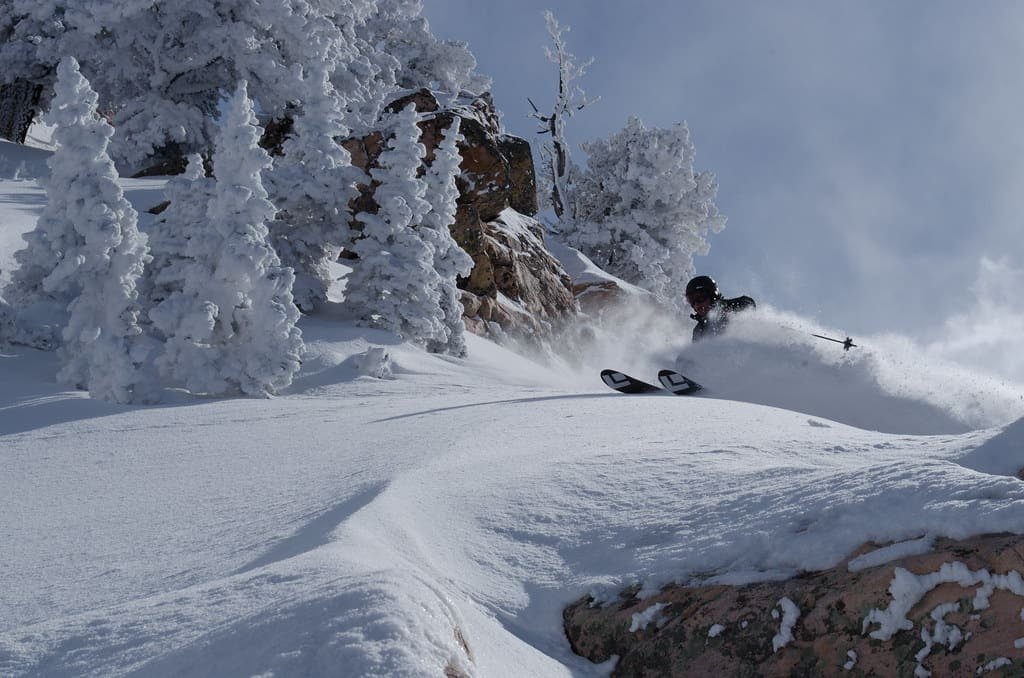
On the mountain
What is a ski safari, and is it worth it?
Moving between resorts instead of staying put — how it works, who it suits, and what changes the price.
In short
A ski safari is a multi-day trip that changes resort each morning based on snow, wind and visibility, rather than skiing the same area all week. In the Aosta Valley one regional pass covers every resort, so a driver and an instructor are what make it work. It suits confident intermediates upward, and the cost per person falls sharply as the group grows.
The facts
- —The route is chosen on the morning, from the snow and avalanche bulletin, not fixed when you book.
- —One instructor and one vehicle are shared across the group, so the per-person price depends heavily on party size.
- —A seven-day trip usually has six planned ski days — the spare day is deliberate, held for weather or recovery.
- —Off-piste variants are led by an IFMGA mountain guide rather than a ski instructor.
- —You do not need to change accommodation: the driver and the equipment move, you do not.
The word "safari" does a lot of work in ski marketing, and most of it is decoration. Here it means something specific and slightly unglamorous: you do not decide where you are skiing until the morning you ski it.
How does a ski safari actually work?
Each morning somebody reads the snow, wind, visibility and avalanche bulletin, checks what has actually opened, looks at how the group went yesterday, and picks the area. A driver takes you there door to door. You keep the same bed all week; the equipment travels in the vehicle and gets serviced overnight. source
Why is this possible in the Aosta Valley specifically?
Because of the pass. One regional ticket covers every resort in the region, so switching valleys costs nothing extra at the lift. In most of the Alps a multi-resort week means buying a new ticket each morning, which quietly discourages exactly the flexibility that makes the snow better. source
Who is it wrong for?
Two groups. Beginners, because the terrain is chosen for conditions rather than for progression, and a first week is better spent building a base in one place. And anyone who wants to know on Monday exactly where they will be on Friday — the whole method depends on not deciding that in advance.
What actually drives the price?
Party size, more than anything else. The instructor, the driver and the vehicle are a fixed daily cost shared by whoever is on the trip, while the lift pass and equipment are per head. Two people share the same fixed cost that four would, so they each pay substantially more. A quoted "from" price is almost always the four-person figure, and it is worth asking which party size any number refers to before comparing two operators.
Instructor or mountain guide?
On piste, a certified ski instructor licensed for the resort you are skiing. Off-piste, an IFMGA mountain guide — a different and higher qualification, and a legal distinction rather than a marketing one. If a trip includes off-piste variants or glacier terrain and does not mention IFMGA anywhere, ask.
Questions people ask
How fit do you need to be for a ski safari?
Comfortable parallel turns on red runs is the usual bar for a standard route. The days are long rather than technical: the demand is more about skiing consistently for several days than about any single difficult run.
Does a ski safari mean changing hotels every night?
Not usually. The common version keeps one base for the whole stay and moves by road each morning. Multi-base versions exist where the geography justifies it, but repacking every night is generally a cost rather than a feature.
What happens if the weather is bad all week?
That is the case a safari is designed for. A bad forecast in one valley rarely means a bad forecast in all of them, so the route moves to wherever is skiing best. A spare day is normally held back for the worst of it.
Is a ski safari more expensive than a normal ski week?
Per day it usually costs more, because you are paying for a private instructor and transport rather than lift access alone. Whether it is worth it depends on party size: the fixed daily cost splits across the group, so four people pay far less each than one.
Sources
Planning something
in this valley?
Tell us what you have in mind. A sentence is enough — you do not need dates or a plan yet. Four days or three weeks, we will come back with your journey plan.
A real person replies, usually within twelve hours. No newsletter signup, no automated sequence, and no obligation to book anything.